Guides
What the buried line is made of, how each method works, and how to tell a blockage from a failure. Several of these exist to talk somebody out of work they do not need.
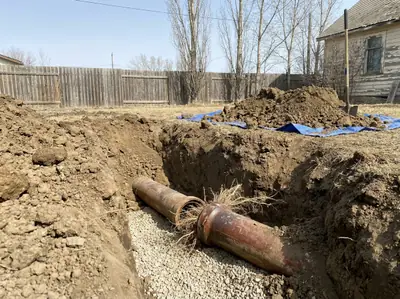
When you should just dig
Written by a trenchless company. There are six situations where trenching is the better job and two where it is the only one, and a contractor who cannot name them has nothing useful to say about method at all.

Selling a house with a bad sewer line
An unknown defect gets priced as the worst thing it could be. A known one gets priced as what it is. That difference is the entire argument for finding out before the other side does.
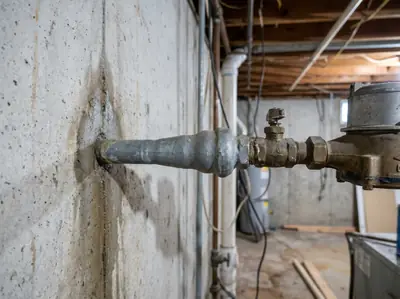
Lead water service lines: how to find out what you actually have
Lead pipe does not leak, does not fail and does not announce itself. Which is exactly why identifying it is a deliberate job rather than something that happens when it breaks.
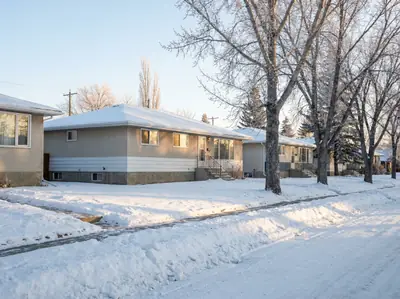
Frozen water line: what froze, and what that tells you
A pipe that froze inside the house is an insulation problem. A buried service that froze is a depth problem, and thawing it does not fix the reason. Telling the two apart is the whole job.
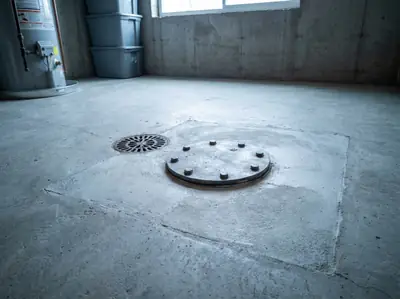
Backwater valves: what they stop, and what they do not
A backwater valve stops the city's sewer coming back up your drain. It does nothing at all about a blockage in your own line — and most basement backups are the second thing.
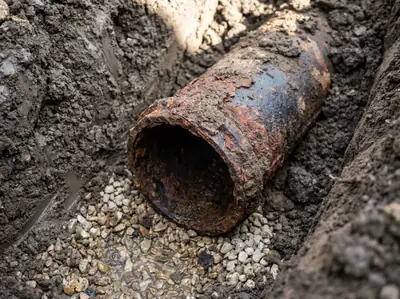
How long does a sewer line last?
Longer than most people are told, and less predictably than anyone would like. Service life is a property of the material, the installation and the ground — not of the calendar.
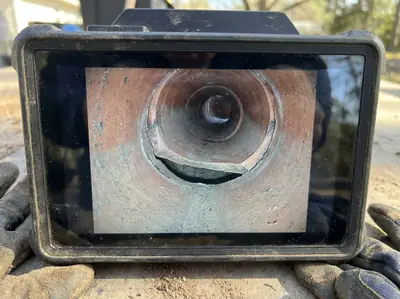
What a sewer camera inspection actually shows
A camera survey is not a formality before the real work. It is the work that decides what the real work is. Here is what an operator is looking at, and what you should be able to see for yourself.
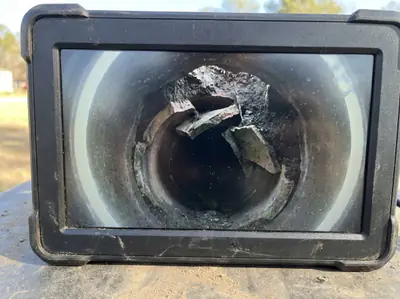
How to tell if your sewer line is collapsed
A blockage and a collapse produce the same symptoms in your house and need completely different work. Here is what separates them, and why only one of them can be diagnosed from inside.
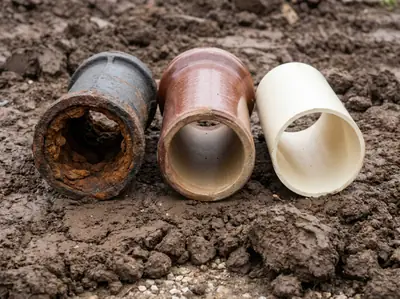
Cast iron vs clay vs PVC: what your sewer line is made of, and why it matters
Three materials, three completely different failure modes, three different repairs. The material is the first thing a camera establishes because it rules out more options than anything else.
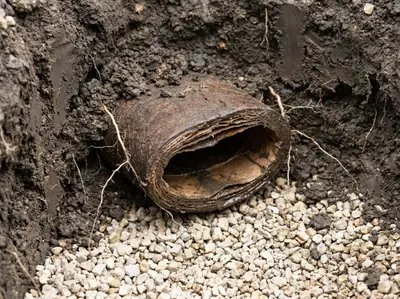
You have Orangeburg. Here is what your options actually are.
Orangeburg is the one material on a camera survey that makes the decision for you. It cannot be lined. Knowing why saves you from buying a liner that will fail into the shape of the pipe it was poured against.
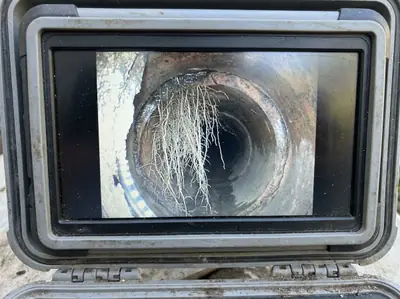
Tree roots in a sewer line: the Calgary version of the problem
Roots do not break into sound pipe. They find an opening that is already there. Which opening, and whether it can be closed, is what decides between a yearly cleaning and a permanent fix.
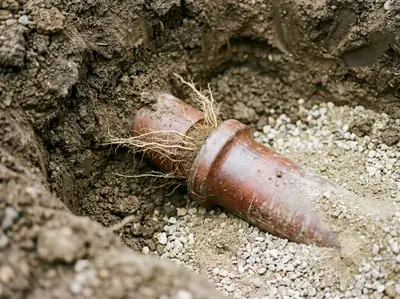
Clay sewer pipe in Calgary: why it fails at the joints
Vitrified clay does not rot, rust or wear out. It fails where two lengths meet, and it has a joint every few feet. That single fact explains most sewer work in the older half of this city.
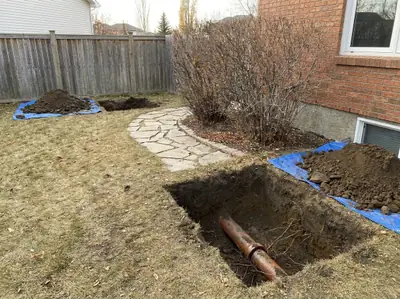
Is pipe bursting cheaper than trenching?
Sometimes, and sometimes emphatically not. The comparison that matters is not pipe against pipe — it is the restored property against the restored property.
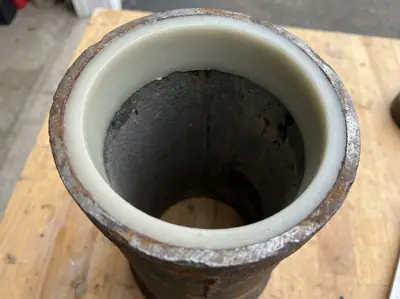
What are the disadvantages of CIPP lining?
Five things cured-in-place lining cannot do, written by a company that sells it. If none of them apply to your line, lining is an excellent answer. If one does, it is the wrong one.
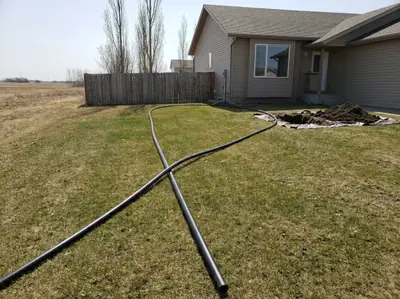
What is a trenchless sewer line?
There is no such thing as a trenchless sewer line — there are trenchless ways of putting one in. Here is what each of them actually does to the pipe in your ground.
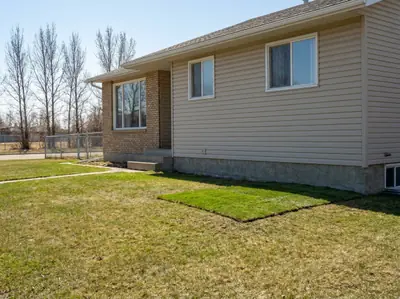
Is trenchless sewer repair worth it?
Trenchless is worth what it saves you above the pipe, not what it does to the pipe. Here is how to work out which one your property is — and when digging is the better buy.