Frozen water line: what froze, and what that tells you
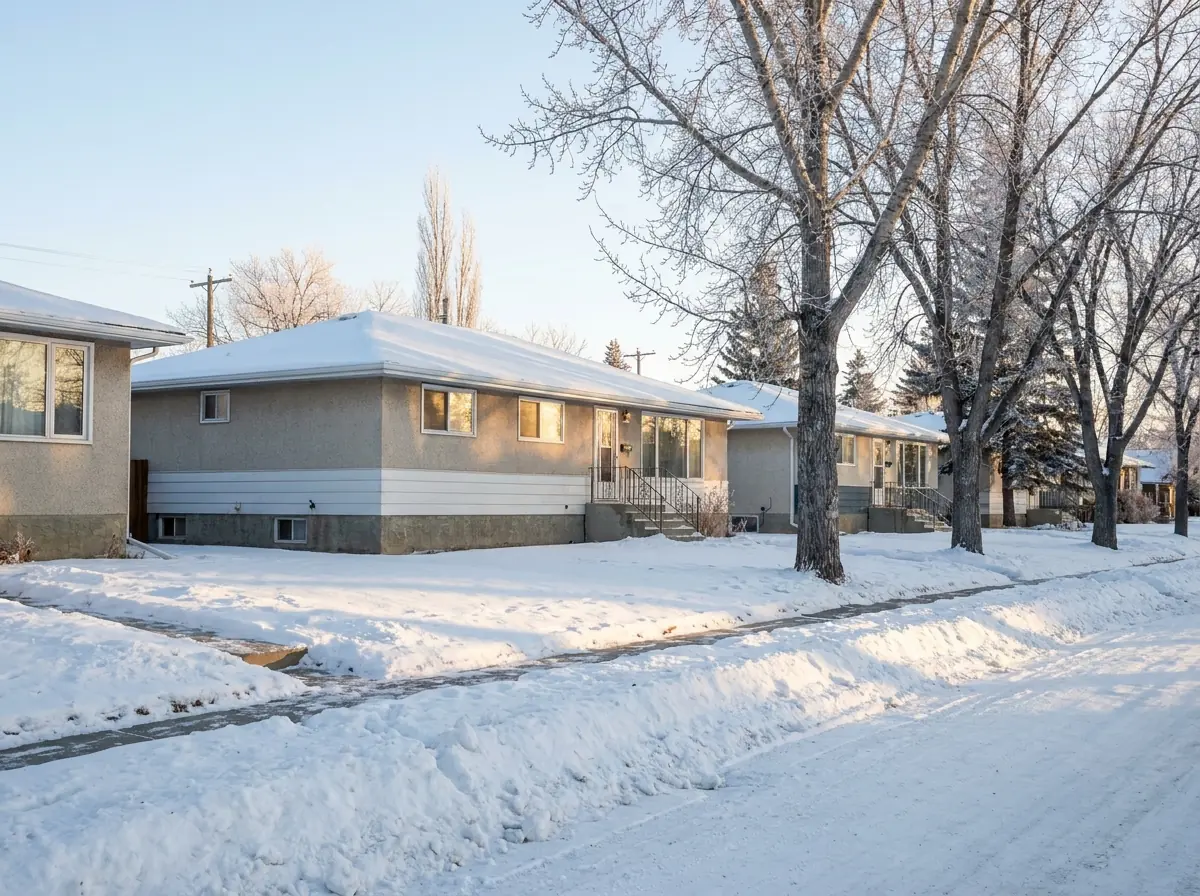
Calgary gets the kind of winter that finds things out. A stretch of hard cold with the ground bare — no snow cover, which is the insulation most people do not realise they are relying on — and services that have been fine for thirty years start freezing.
If you have no water, the first and most useful thing to establish is where it froze, because the two possibilities are unrelated problems with unrelated fixes.
The two places a water line freezes
Inside the building
An exposed run in a crawlspace, along an uninsulated rim joist, in an attached garage, behind a wall on the north side of the house, or in a basement area that has never been heated properly. Cold air gets to a pipe that has water sitting still in it.
Signs it is this one:
- Some fixtures work and others do not. A frozen interior branch takes out what is downstream of it and leaves the rest alone.
- You can find a cold spot. Run a hand along accessible pipe. A frozen section is noticeably colder than the pipe either side of it and sometimes frosted.
- It happened during a cold snap and after a door or a vent was left open, or after a room stopped being heated.
This is an interior plumbing and insulation problem. It is the more common of the two and the easier to resolve.
The buried service, between the main and the house
The line running underground from the connection at the street to where it enters your building. Signs it is this one:
- Nothing in the house has water. No fixture anywhere, hot or cold.
- It came back slowly over days as the weather turned, then went again with the next cold snap.
- It has happened before, in the same conditions.
This is not an insulation problem. It is a problem with how much ground is between the pipe and the cold, and that has consequences the first version does not.
Why a buried service freezes when it did not used to
Water services are laid deep enough that the frost does not normally reach them. When one freezes, something in that sentence has stopped being true, and it is worth knowing which.
The line is shallower than it should be along part of its run. Often just a stretch of it — under a driveway, near where it enters the building, or somewhere the grade was changed after the service went in. The whole line does not have to be shallow. One cold section is enough.
The ground above it changed. Landscaping regraded, a garden bed dug out, a walkway put in, a driveway widened. Removing material above a buried line removes exactly the thing keeping it warm.
There is no snow cover. Snow insulates the ground. A hard, dry, bare-ground winter drives frost deeper than the same temperatures with snow on top, and that is when the marginal services find out they are marginal.
Bare hard surfaces above it. A driveway or a walkway over the run conducts cold down more readily than lawn does, and gets cleared of the snow that would otherwise insulate it.
Nothing has been running through it. Moving water is much harder to freeze than still water. A service into a property that is empty, seasonal, or simply not using much water is at greater risk than the same pipe in a busy household.
What not to do
Short list, and all of it matters.
No open flame. Ever. Not a torch, not a heat gun on plastic, not a space heater pointed at a wall cavity. House fires start this way every winter, and on a plastic service a flame does not thaw the pipe, it destroys it.
Do not force a frozen line back into service by turning up pressure. Ice is a blockage. Pressure behind a blockage is how a pipe splits.
Do not leave it and hope. Pipes do not usually burst while frozen. They burst when they thaw, because the split that ice opened does not become a leak until water can move through it again. A line that thaws unattended in an empty house is the classic version of this.
Do not assume the thaw is the end of it. The first thing to do once water returns is walk the house and look — under sinks, at the meter, along any exposed run, and at the ceiling below anything that froze. And then look again a day later.
What to do
If it is interior and you can reach it: gentle, dry heat on the affected section — the kind of heat you would be comfortable leaving in a room — with the fixture downstream of it opened so that melt water has somewhere to go and you can hear it start moving. Warm the area, not the pipe itself, and never with a flame.
If it is the buried service: this is not a homeowner job and there is no safe improvised version of it. It needs somebody with the right equipment, and it needs to be handled by someone who will also be there for what happens afterwards.
If a pipe has split: find the shut-off and close it before anything else. Know where that valve is before you need it — the worst time to go looking is with water coming through a ceiling. If you have never located it, do that this week rather than in February.
About running a trickle during extreme cold: this comes up every winter and the advice varies by utility and by conditions. Check what your water utility is actually advising in the current cold snap rather than taking it from a web page, including this one.
The part that matters more than the thaw
A buried service that froze once will freeze again in the same conditions.
Thawing it restores water. It does not add ground above the pipe, it does not move the shallow section, and it does not change the driveway over the run. Next hard, bare winter, the same thing happens.
So the question after the emergency is over is what your service actually is and where it actually runs — and that question is usually worth asking in spring, calmly, rather than in January.
There is a second thing worth knowing: ice damages pipe. A service that has frozen has been stressed, and copper in particular can come out of a freeze with a split or a weakened spot that starts leaking weeks later, underground, with nothing showing at the surface for a long time. Copper services corrode and leak quietly anyway; a freeze gives them a head start.
If your water bill climbs after a winter like that, or you have a damp spot in the yard that outlasts the melt, that is worth chasing. It is found with acoustic leak detection, pressure testing and correlation — not with a camera, because water services are too small for one.
When a replacement is the honest answer
Not because a line froze. Because of what the freeze revealed.
A service that has frozen repeatedly, or one that is shallow along a stretch you now know about, has a problem thawing cannot reach. Replacing it puts in a new line — fused HDPE, pulled through from two small pits rather than trenched down the length of the yard — laid to proper cover for the conditions here.
That is a real job and we are not going to pretend it is a small one. But it is the only version of this story that ends.
And the counterweight, because it belongs here: a line that froze once, during an exceptional cold snap, in a winter with no snow on the ground, after which nothing else has gone wrong, may simply have had a bad week. One freeze is information, not a verdict. Two is a pattern.
The short version
Work out whether it was inside or underground. Inside is insulation. Underground is depth, and depth does not fix itself.
Never use a flame. Watch for leaks after it thaws, not during. And if it is the buried service, use the spring to find out why rather than waiting for the next cold snap to ask again.
Water line repair · Water line replacement · Leak detection · Something urgent
Want the line looked at?
Nothing here gets quoted off a description. The camera goes down first, you watch the screen, and you keep the footage — including on the jobs where the answer turns out to be that nothing needs replacing.