Sewer and water line replacement in Calgary
Trenchless sewer and water line replacement, CIPP lining, camera inspection and drain cleaning across Calgary. We camera the line before we quote it.
What is in the ground here
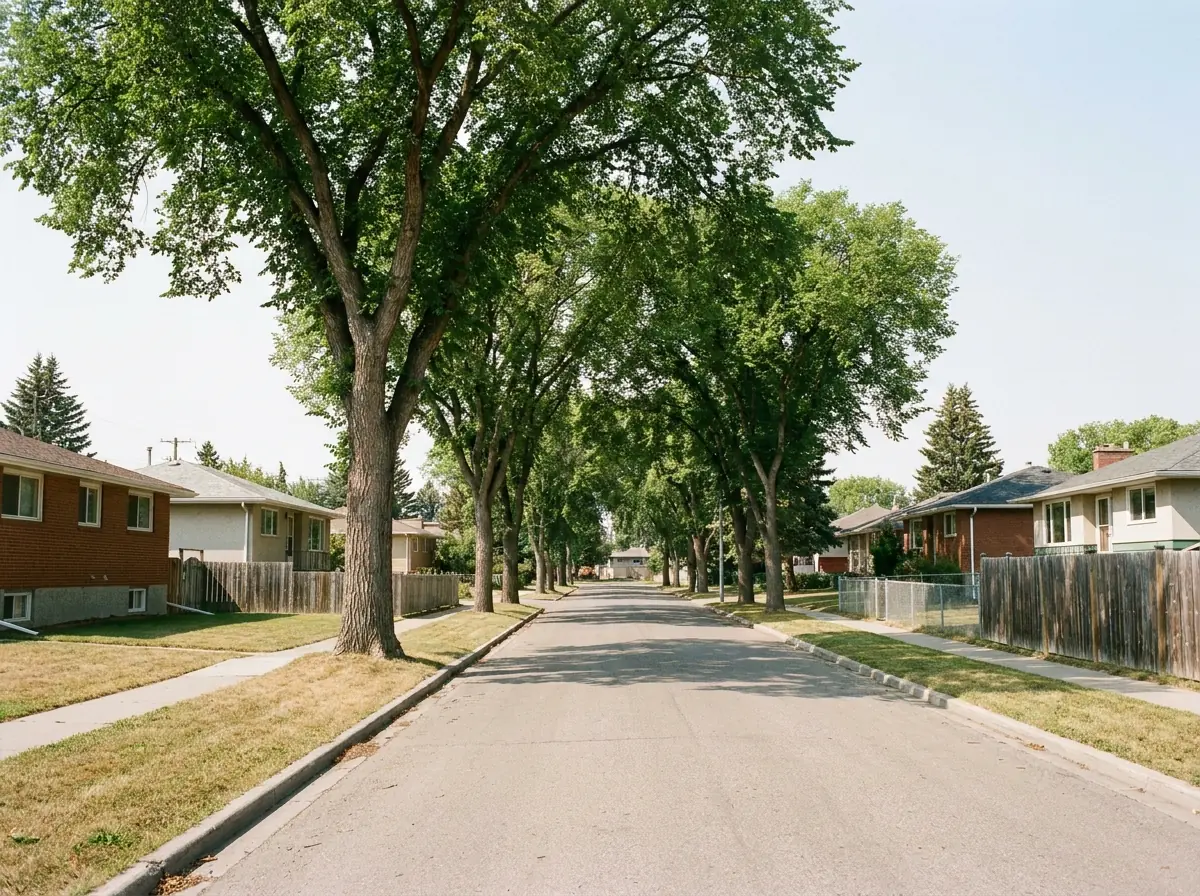
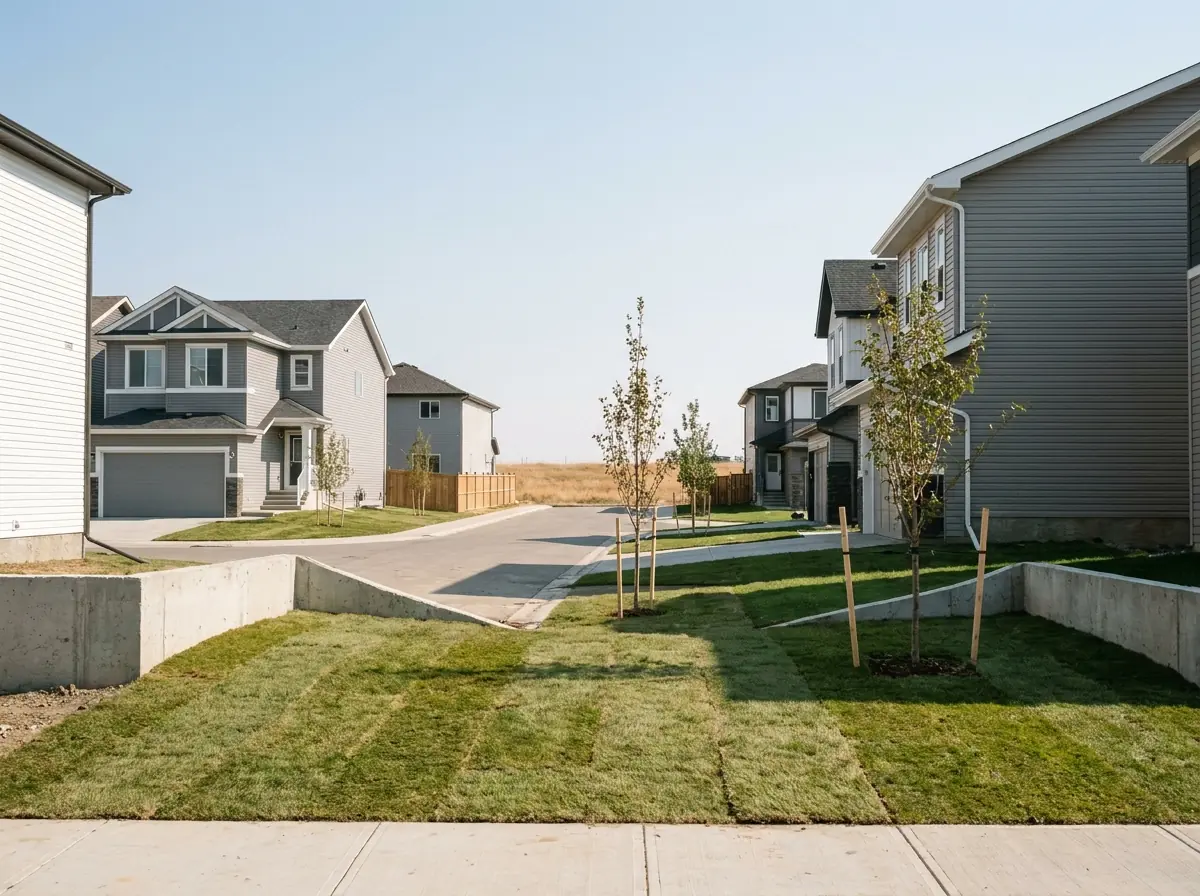
Calgary spans roughly 140 years of buried pipe, and the city is effectively two markets in one. Inside the older rings the lateral is commonly vitrified clay — jointed every few feet, structurally fine, and surrounded by one of the largest healthy American elm populations left anywhere, which have had decades to find those joints. Out in the post-1980s communities the same house has PVC or ABS in long runs with almost nothing for a root to enter, and a blocked drain there is usually a blockage rather than a failing line.
Calgary is not one market for buried pipe. It is two, and the line between them is a date rather than a place. The city grew outward in rings, and each ring was serviced with whatever the trade was installing at the time, so the single most useful thing to know about a Calgary property is not its address but the decade it was built. Everything that follows — what the lateral is made of, how it will fail, whether it can be lined, whether it needs anything at all — comes off that one fact.
On the older side of the line, the sanitary lateral is commonly vitrified clay, and the industry is careless about what that implies. Clay is often still structurally sound at a hundred years, provided the joints have held — age alone is not a reason to replace clay. A century-old clay lateral is not automatically a failing clay lateral. What puts it at risk is not the material aging but what has grown into it, and Calgary happens to sit over one of the largest remaining healthy American elm populations anywhere. That canopy is the reason the older half of this city has a genuine sewer problem and not just an old one.
On the newer side, the same house has PVC or ABS. The change is not really about the plastic being better material, although it is — it is about joints. Clay arrives in short lengths and every length has a seam. Plastic arrives in long runs with very little for a root to enter, and it shows: Long clean runs. A defect in PVC is usually one identifiable event at one location, not a line-wide condition. That is why a blocked drain in a 2005 community and a blocked drain in a 1925 community are not the same call, and why a company that answers them the same way is guessing.
Where the frame breaks is worth saying out loud. A 1912 house whose lateral was replaced in 1998 is, underground, a 1998 house. A property on the tail end of the clay era may have gone in either way. A line can have been repaired in one section and left original in the rest, which is common and produces a camera run that changes material halfway along. So the build date is a prior, not a diagnosis. It tells us what to expect and what equipment to bring. It does not tell us what is down there, and we do not quote as though it does.
Most likely under a Calgary property
Ordered most to least likely, with how each one fails. This is a generalisation about an area and never a statement about one address.
- Vitrified claycommonly found in homes built before roughly the 1960s, and in some areas later than that
- It fails at the joints, not in the middle of the pipe. Every joint is a seam a root can find, and a mature boulevard tree has had decades to find all of them. Joints also offset as the ground moves, leaving a lip that catches everything passing over it.
- Cast ironcommon in mid-century construction, and still found in buildings of that period today
- It corrodes from the inside out. Scale builds on the pipe wall and narrows the bore until a line that was four inches is effectively passing two, and eventually the bottom of the pipe — where the flow sits — corrodes through entirely while the crown still looks fine.
- PVCcommon from roughly the 1970s and 1980s onward, and the default in newer construction
- Same story as ABS — the pipe outlives the problem. Bellies from poor bedding, crushing from heavy equipment over a shallow run, and root intrusion at a gasketed joint that was not seated properly.
- ABScommon in Canadian construction from roughly the 1970s onward
- The material rarely fails on its own. What fails is the installation: a belly where bedding settled and now holds standing water, a crushed section where something was driven over it, or a joint that was cold-welded badly on the day.
- Copperthe common water service material through much of the later twentieth century and still installed today
- Pinhole leaks. Copper corrodes from the outside where soil chemistry is aggressive to it, and from the inside where water chemistry is. A service can leak for a long time underground before anything shows at the surface.
Material and era are trade generalisations, not a record of what is under any particular property. What is actually in the ground at an address is settled by a camera, not by the year the house was built.
Who calls us from Calgary, and why
Two calls come in from this city and they want opposite things. The first is from an owner inside the older rings who has had the line cleared twice already, is watching the interval between backups get shorter, and has worked out on their own that clearing it again is not a plan. That owner is not asking whether something is wrong. They are asking what the actual repair is, what it costs them in yard and driveway, and whether there is a way to do it that does not involve a trench down the side of the house. For them the answer is usually a real one, and the camera decides between lining, a spot repair and a full replacement.
The second call is from an owner in a community built in the last thirty years who has just had their first backup ever and has been told by somebody that the line needs replacing. That owner is right to be suspicious, and a large share of the time the honest answer is that the line is fine and something is sitting in it. We would rather run a camera, say so, clean it and leave than sell a replacement into a sound plastic line. That is not a courtesy. It is the reason the first caller can believe us when we tell them their line is finished.
Specific to Calgary
- The elm canopy cuts both ways
- Calgary holds one of the largest healthy American elm populations left in North America, which is a genuine civic asset above ground and the leading cause of sanitary lateral failure below it. Both things are true at once, and neither is a reason to take a tree down.
- Build date is a prior, not a diagnosis
- Era tells us what to expect and what to put on the truck. It is wrong often enough — replaced sections, late installs, partial repairs — that we treat it as a starting hypothesis and let the camera settle it.
- Roughly half these calls should end in a cleaning
- Across a city with this much post-1980s housing, a company doing honest work here will find sound pipe and a blockage at least as often as it finds a failed line. If a contractor never reaches that conclusion, that is information about the contractor.
- Someone answers at 3am
- Dispatch runs 24/7 with a person on the phone, not a service that takes a message. A sewer backup at two in the morning is not a next-business-day problem and we do not treat it as one.
Permits and the authority
Permits for this work come from the City of Calgary, everywhere inside the city limits and in all four quadrants. There is one question worth settling early on any sewer or water service job here, and it is not a technical one: which section of the run between the main and the house is the property owner's responsibility and which is not. That boundary decides who is paying for what, and it is the first thing to confirm directly with the City for your specific address and service. We will not guess at it, and neither should anyone quoting you.
Communities and districts we work in
Inglewood · Hillhurst · Bridgeland · Elbow Park · Mount Pleasant · Killarney · Bowness · Acadia · Marlborough · Brentwood · Tuscany · McKenzie Towne · Saddle Ridge · Mahogany · Evanston
What we do in Calgary
Trenchless Sewer Repair
Sewer lines replaced from two pits, not a trench.
Drain Cleaning
Drains cleared, and an honest answer on why.
Water Line Replacement
New water service pulled through, lawn intact.
Water Line Repair
One leak in sound pipe is a repair, not a rebuild.
Commercial & Multi-Residential
Underground work scheduled around your tenants.
Every one of those pages describes the same work wherever it is done. What changes in Calgary is which of them you are likely to need, and that is what the rest of this page is about.
Questions we get asked everywhere
The general questions have the same answers in Calgary as they do anywhere else, so they are answered once, in full, on one page rather than restated here with the place name changed.
Tell us what the line is doing
What came out, where, and roughly how old the house is. Those three answers decide what gets loaded before anyone leaves the yard.