Drain Cleaning

Hydro Jetting

High-pressure water that cleans the pipe wall rather than punching a hole through what is blocking it.

Almost nobody arrives here on a first blockage. The people reading this page have had the line cleared already — possibly more than once — and it did not hold, and they have worked out on their own that something about the pipe is different from what they were told. That instinct is usually right.

High-pressure water through a nozzle that pulls itself up the line, cutting roots and stripping grease and scale off the pipe wall on the way back. A snake punches a hole through a blockage; a jetter cleans the pipe. The distinction matters more than it sounds. A line whose wall is coated in hardened grease, or narrowed by scale, will pass water perfectly well through a hole punched down the middle of the deposit, and will start catching again as soon as anything with an edge on it goes past. Nothing was removed. The bore was borrowed.

So jetting is for a specific set of conditions and not for the general idea of a bad drain: grease, scale, sediment and root intrusion in a pipe that is structurally sound. Those are the cases where stripping the wall back actually changes the behaviour of the line rather than resetting a clock. In everything else it is either overkill or, on a pipe that is already in trouble, an active risk — which is the next section, and it is the most important one on this page.

How hydro jetting runs, step by step

  1. Step 1

    Camera first

    Jetting a pipe that is already failing structurally can finish it. Looking first is not an upsell, it is the safety check.

  2. Step 2

    Match the nozzle

    Roots, grease and hard scale each want a different nozzle. One head for everything is how pipes get damaged.

  3. Step 3

    Work back down the line

    The nozzle pulls itself up the pipe and cleans on the way back, so debris is drawn towards the access rather than pushed further in.

  4. Step 4

    Verify on camera

    The same line, cleaned, on the same camera — and if what is underneath the grease is a cracked pipe, you see that too.

What the day actually looks like

The camera goes down first, every time, and not as a formality. A pipe sound enough to take the pressure. This is why the camera goes in first. What the camera is looking for is not the blockage — the blockage is already a known quantity — it is the condition of the wall behind it and whether the pipe can take the work. If the answer is no, the visit changes shape on the spot and turns into a different conversation, which is a better outcome than the alternative. Where the line is sound, the hose goes in through the access point, usually a cleanout, and the nozzle pulls itself up the run and cleans on the way back so debris is drawn towards the access rather than driven further in.

On site it is wetter and less dramatic than people expect. There is a hose reel, a machine that is loud in bursts, water that has to go somewhere, and long quiet stretches where the operator is doing nothing visible at all — standing on the hose, feeling the line, reading how the nozzle is loading and what is coming back past it. That is the diagnosis happening. Then the same camera goes back down the same line, and you watch it. If what was underneath the grease turns out to be a cracked or offset pipe, you see that too, on the same screen, in the same visit. No excavation. Normally a same-day visit.

What decides the scope

Four things set the scope. What is actually in the pipe — roots, soft grease, hardened grease and mineral scale each want a different nozzle, and matching the head to the deposit does more than any amount of extra pressure does. How long the run is and how it is reached, since a line worked from an existing cleanout and one reached through a pulled fixture are not the same visit. Whether descaling is in scope: cast iron is the usual reason it would be, because it corrodes from the inside out. Scale builds on the pipe wall and narrows the bore until a line that was four inches is effectively passing two, and eventually the bottom of the pipe — where the flow sits — corrodes through entirely while the crown still looks fine. And whether there is a water supply on site to run from, which is ordinarily trivial and occasionally is not.

The fifth thing can remove the job entirely, and it comes off the camera rather than out of a quote. Where an iron line has channelled badly, the cleaning itself is sometimes what settles the question: Lining works only if enough sound wall remains to carry the liner while it cures, and heavy channelling can mean there is not. Descaling first is often required, and sometimes descaling is what reveals the pipe is past lining. A pipe in that condition is not a cleaning job with a cleaning price attached to it, and treating it as one is how a line that still had years in it ends up being replaced this month.

What people get wrong about this

Pressure is not the variable people think it is

Buying the biggest number does not buy the best clean. Nozzle selection, how the head is worked back down the run, and the condition of the wall it is being used on decide the outcome. Pressure applied through the wrong head to a tired pipe is the combination that does damage.

Jetting a line nobody has looked down

It cannot be used safely on a pipe that is already failing structurally. Jetting a badly deteriorated line can finish it. The camera is not an added line on the invoice, it is the check that says whether the work is safe to do at all — and it is the one step that a same-day quote over the phone cannot include.

Annual jetting as a root plan

Where roots are the problem, jetting treats the symptom. They grow back, and the joint they are entering through is still open. A line jetted every spring is a line whose owner is paying, indefinitely, to postpone a decision. There is nothing dishonest about doing it once to find out what you are dealing with. Doing it for five years running is a repair being paid for in instalments and never actually bought.

Expecting it to fix the shape of the pipe

It is cleaning, not repair. It does not fix a crack, an offset or a belly — it removes what is sitting in them. Standing water sitting in a low spot with the pipe wall sound either side of it. Clean pipe with one specific defect, rather than a line failing all over. Jetting that line removes what has collected in the low spot and leaves the low spot exactly where it was, which is why the same section fills again.

When this is the wrong answer

Two cases, and the second one is by far the more common. A collapsed or heavily deteriorated line, and as a permanent answer to roots that keep returning — that is a lining conversation. Where the camera shows root intrusion returning to the same joints, the pipe is telling you what it needs, and the honest recommendation is a repair rather than a cleaning schedule: a structurally sound but leaking pipe — the classic case being clay with root intrusion at the joints and good pipe in between. That conversation is worth having once, properly, instead of every spring. And at the other end of it — one soft blockage in a modern plastic run does not need a jetter at all. A cable clears it, the pipe behind it is intact, and hiring the bigger machine for that job is money spent on equipment rather than on a problem.

The method itself, including what it cannot do

Every method we use is defined in one place, so the page describing it and the page comparing it cannot disagree. The limitations below are part of that definition, not a disclaimer attached to it.

Hydro jetting

Also called high-pressure water jetting, drain jetting

High-pressure water through a nozzle that pulls itself up the line, cutting roots and stripping grease and scale off the pipe wall on the way back. A snake punches a hole through a blockage; a jetter cleans the pipe.

What it needs from the existing line

  • A pipe sound enough to take the pressure. This is why the camera goes in first.
  • Access, normally through a cleanout.

What it cannot do

  • It is cleaning, not repair. It does not fix a crack, an offset or a belly — it removes what is sitting in them.
  • It cannot be used safely on a pipe that is already failing structurally. Jetting a badly deteriorated line can finish it.
  • Where roots are the problem, jetting treats the symptom. They grow back, and the joint they are entering through is still open.
What the property looks like
No excavation. Normally a same-day visit.
Right when
Grease, scale, sediment and root intrusion in a pipe that is structurally sound.
Wrong when
A collapsed or heavily deteriorated line, and as a permanent answer to roots that keep returning — that is a lining conversation.
Side by side with the alternatives, and when the answer is a dig →

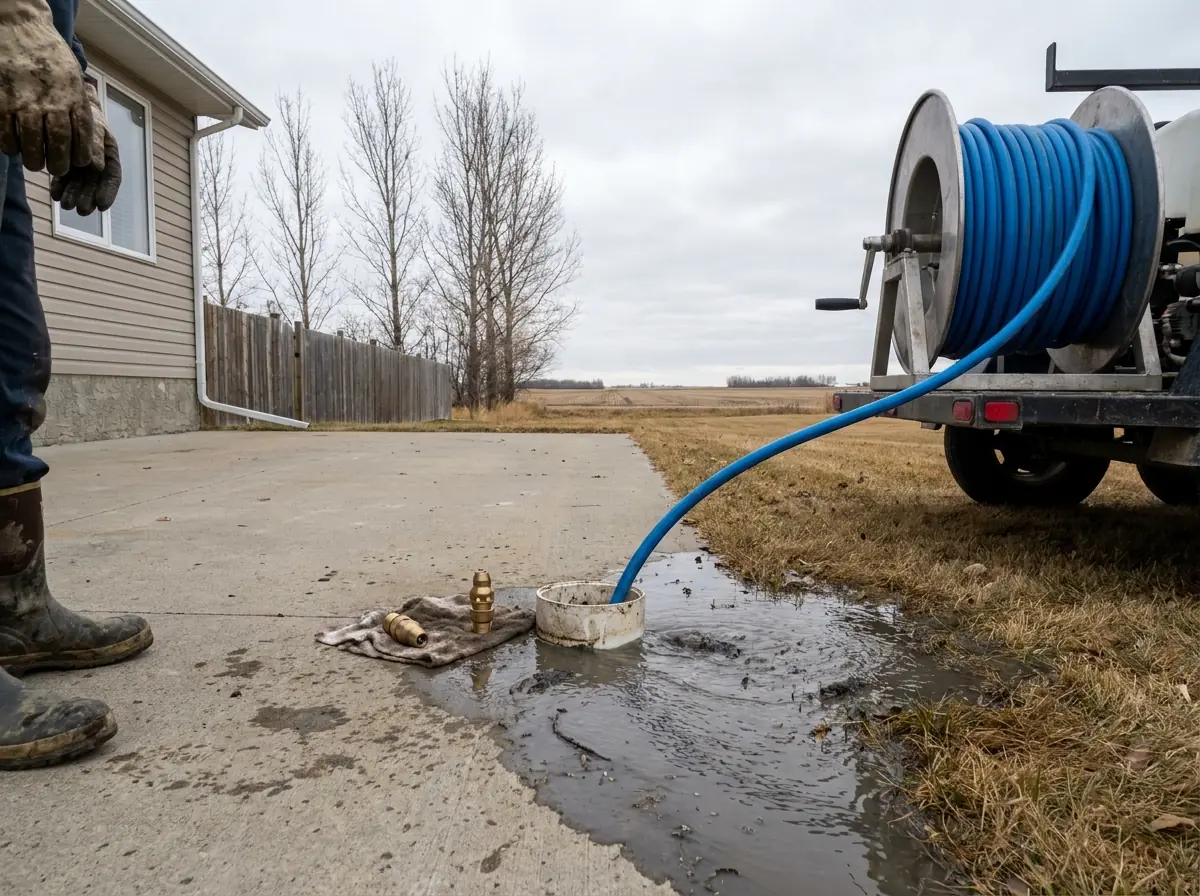
A hydro jetting hose running into a sewer cleanout, dirty water carrying debris back out around it.
A jetting hose running into a cleanout

Questions about hydro jetting

The ones that come up on this work specifically. The general questions are answered on the FAQ page.

Is jetting safe on my pipe?
On a structurally sound line, yes. On one that is already failing, no — and this is not a small caveat. The pressure that cuts a root mass can finish a badly deteriorated pipe, and a line that was nearly gone before the nozzle went in can be gone after it. That is the reason the camera goes first. It is a precondition, not an upsell, and a company willing to jet a line it has not looked down has decided your pipe is your risk rather than its own.
Will jetting stop the roots coming back?
No. Where roots are the problem, jetting treats the symptom: it removes what has grown in and leaves the joint they came through exactly as open as it was. They grow back, on their own timetable, through the same opening. That is not a failure of the work — it is the nature of the work — and anyone selling jetting as a permanent answer to root intrusion is misrepresenting it. The permanent answer removes the openings, which means lining the run or replacing it.
What does jetting do that a cable does not?
It cleans the pipe wall rather than the middle of the pipe. A cable bores through what is sitting in the line and restores flow, which leaves most of the material where it was — grease still coating the wall, root mass still anchored at the joint, sediment still in the low spots. A jetter nozzle pulls itself up the line and washes the wall on the way back, so what comes out is the cause rather than a channel through it. On a line that keeps blocking in the same place, that difference is the whole point.

Nothing is quoted off a description

The camera goes down first and you keep the footage. If the answer is that there is nothing wrong with your line, that is what you will be told.