For Condo & Strata Boards
Evidence a board can vote on: camera footage, a written condition report, and a scope that says what happens to residents.
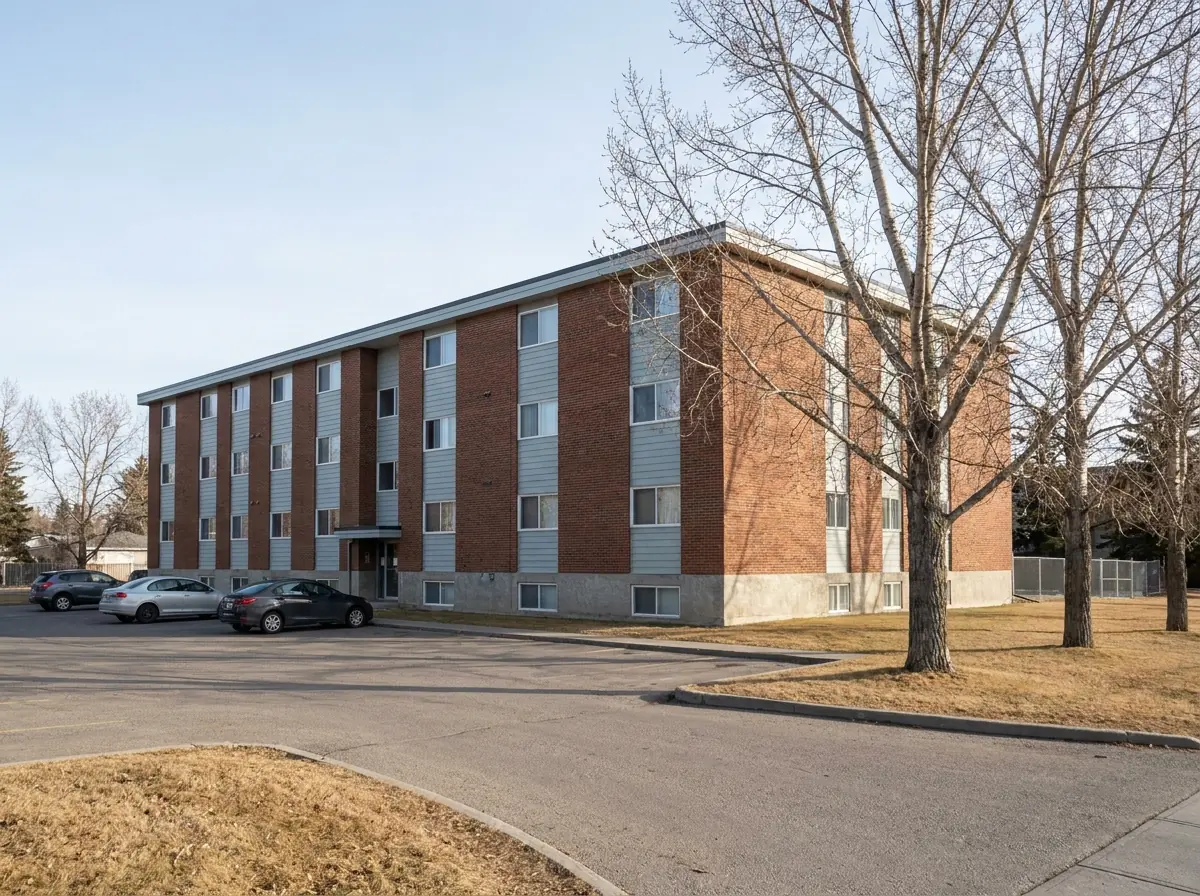
A board is a small group of owners being asked to approve a significant spend on a pipe that none of them have ever seen, usually on a manager's recommendation, and sometimes after one unit has already had sewage come up through a floor drain. The decision itself is rarely the hard part. Defending it to the people who are funding it is.
Which means a board needs the same thing any hearing needs: evidence, recorded at the time, in a form it can show. Camera footage of the actual line under the actual building. A written condition report with the defect located at a measured distance. A scope that says plainly what happens to residents, which units are affected, and for how long. Everything beyond those three things is somebody's opinion about a pipe, including ours.
And boards turn over. Whatever is decided has to outlive the people who decided it, or the next board inherits a rumour and starts the argument again from nothing. Footage and a report held in the corporation's own records are what make a deferral defensible in three years and a replacement defensible at the meeting where it is questioned.
What the day actually looks like
The survey is the first and sometimes the only job. Access through a cleanout, the line cleaned enough to see clearly, then a camera with a sonde so the defect can be put at a distance and a position rather than described. The finding that most often changes what a board is being asked to approve is that the run is not uniformly bad: Root masses entering at regular intervals, matching the joint spacing. Offset joints showing a step in the pipe wall. Often a long run of sound pipe between two bad joints. A recommendation to replace an entire length, on a line where the camera shows two failed joints and sound pipe between them, is a recommendation worth a second look.
Then nothing happens, and that is the design. The report goes to the board, gets read, gets discussed at a meeting we are not in, and possibly waits for a general meeting before it funds anything. We do not chase it. When there is a decision, work is sequenced into windows the board has agreed, resident notices are drafted against the actual scope rather than a generic template, and where the pipe accepts a liner it is usually the least disruptive route available: Usually the least invasive option available, often reached through an existing cleanout with little or no excavation. The line is out of service while the liner cures. That last sentence is the one residents actually experience — a defined period with the line out of service — and it belongs in the notice, not in the fine print.
What decides the scope
How many units sit on the failed run, whether one line serves several buildings, the length and depth of it, the material, and what is on the surface between the access points. Visitor parking, a landscaped courtyard, a walkway and a play area are all reinstatement, and on a condominium site reinstatement is frequently the largest single number in the exercise. Where the run happens to pass under a grass strip with nothing on it, open-cut can genuinely be the cheaper answer, and it is not in the corporation's interest for a trenchless contractor to pretend otherwise.
Age on its own is not a specification driver and should not be treated as one — what decides a clay line is the state of its joints, and only the camera can see those. Nor is method a free choice; the pipe rules options in and out before anyone gets a preference. A liner is not a correction: It reproduces the geometry it is given. A bellied line stays bellied, and water will still stand in the same low spot afterwards. If the camera shows the line sits low and holds water, a liner will hand the corporation a new pipe with the old pipe's problem moulded into it, and any scope that does not address that is a scope the board will be asked about later.
What people get wrong about this
Voting on quotes instead of a condition report
A quote tells a board what a contractor proposes to do. A condition report tells it what is actually there. Buy the second first, then put it in front of several contractors so the quotes are priced against one set of facts — otherwise the board is comparing three different opinions about three different pipes and calling it a tender.
Replacing on age alone
Old is not the same as failing, and a board that replaces on a date rather than on a finding will spend a reserve on a line that had decades left. Vitrified clay is often still structurally sound at a hundred years, provided the joints have held — age alone is not a reason to replace clay.
Assuming trenchless is automatically cheaper
It usually is where the surface above the line is expensive to put back, and it usually is not where the surface is nothing. Open-cut excavation is the right answer for A line that has to change grade or route, a collapse in a spot that cannot be reached from either end, a run too shallow or too congested to burst safely, and — often — a short run under ground with nothing on it, where digging is simply cheaper than mobilising trenchless equipment.
Deferring without a date
Deferral is a legitimate decision and frequently the correct one. Deferral with no re-survey date attached is not a decision, it is a gap, and the board that inherits it has no idea whether it is looking at two years of life or two months. Put the next survey in the calendar at the same meeting that defers the work.
When this is the wrong answer
If the problem is inside the building — a stack, a riser, branch drains within the units, anything above the slab — it is not ours, and a board should be wary of any contractor who does not draw that boundary early and in writing. If the corporation has no camera evidence and is being pushed toward a full replacement, the honest advice is to buy the survey on its own, then put it in front of more than one contractor, including us; a company that will not quote against someone else's footage is telling you something. And a board weighing a reserve spend is entitled to weigh who it is spending with. Chinook is a new company with no history to point at, and the way to test a new company is on evidence rather than on claims: ask for the pre-work footage in a format the corporation keeps, ask for current WCB clearance and proof of liability coverage before anyone mobilises, and ask what happens if the camera contradicts the quote. We provide the first two before mobilisation as a matter of course, and the answer to the third is that the camera wins and the scope changes.
Questions about condo boards
The ones that come up on this work specifically. The general questions are answered on the FAQ page.
Who is responsible for which section of the line?
Can we get a survey before committing to any work?
Can the work be staged across more than one budget year?
People also ask
Answered in full, once, on the page each one belongs to — rather than repeated on every page of this site.
Nothing is quoted off a description
The camera goes down first and you keep the footage. If the answer is that there is nothing wrong with your line, that is what you will be told.