Drain cleaning in Calgary
Drains cleared and cleaned across Calgary. Most calls are a blockage and not a failure, and we will tell you which one you have.
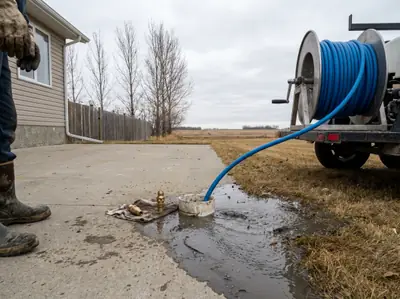
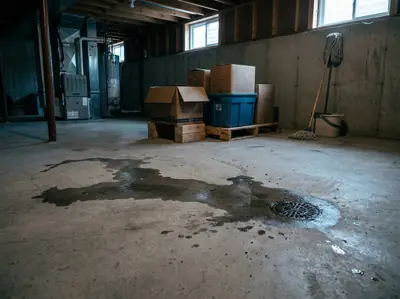
A drain that will not drain tells you very little on its own, and the first thing worth working out is how much of the house is affected. One slow fixture while everything else runs normally is a branch problem — the trap or the short length of pipe behind that one sink, tub or toilet. Every drain in the building backing up at once, surfacing at the lowest opening there is, means the main lateral: the single line that carries everything from the house out to the connection. In the room you are standing in those two look almost identical. They are not remotely the same job.
The second thing that decides everything is what the buried line is made of, and in Calgary that splits the city in half. Inside the older rings a lateral is commonly vitrified clay — commonly found in homes built before roughly the 1960s, and in some areas later than that. It fails at the joints, not in the middle of the pipe. Every joint is a seam a root can find, and a mature boulevard tree has had decades to find all of them. Joints also offset as the ground moves, leaving a lip that catches everything passing over it. Put a mature boulevard elm over a pipe with a seam every few feet and it will find them, one by one, for decades.
Out in the communities built from the 1980s onward the same house has PVC or ABS in long runs with very little for a root to enter. Long clean runs. A defect in PVC is usually one identifiable event at one location, not a line-wide condition. So here is the part worth saying before you call anybody: if the camera shows sound PVC and one blockage, that is what we will tell you. Clearing it is the entire job, and there is no second conversation to have. A company that will sell a line replacement into a plastic-pipe blockage has no standing to tell the homeowner across town that their clay lateral is finished — and that homeowner is the one who actually needs to be believed.
How drain cleaning runs, step by step
-
Step 1
Clear the immediate problem
First job is getting the drain running again. Everything else is a conversation you can have once the water is going down.
-
Step 2
Find out why
A drain that blocks repeatedly is telling you something about the pipe. A one-off is just a one-off.
-
Step 3
Camera it if it keeps happening
Two blockages in the same line inside a year is the point at which looking is cheaper than clearing it a third time.
-
Step 4
Clean rather than punch through
Where the wall is coated in grease or scale, jetting strips it back. A snake makes a hole through the middle of the problem.
-
Step 5
Say what it actually needs
If the camera shows sound PVC and one blockage, that is what we tell you. Selling a replacement into a blockage is how trust gets lost.
What the day actually looks like
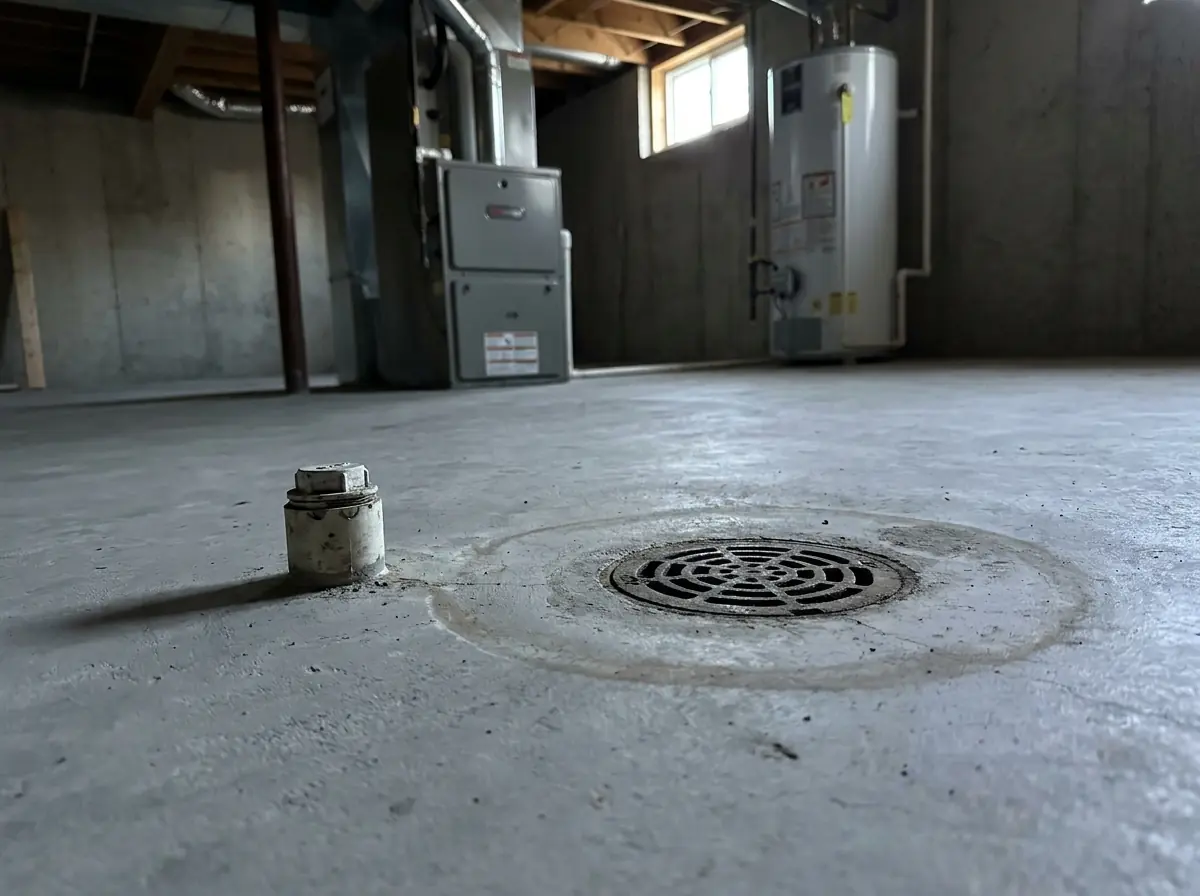
Most of a drain call is spent deciding where to go into the line from, not clearing it. A house with an accessible cleanout is straightforward — the machine goes in there and the rest of the house is untouched. A house without one means working through a floor drain, a stack, or a pulled fixture, and that access problem, rather than the blockage itself, is usually the part that takes longest and the part nobody expects. If you know where your cleanout is, say so on the phone; if you have never seen one, that is worth knowing too, because it changes what gets carried in.
Then there is a stretch where nothing appears to be happening. The cable is down the line, the machine is running, and the operator is standing more or less still, reading it — resistance, where it stops, whether it gives all at once or grinds through. What comes back on the head is the first real information anyone has had: grit, hair, hardened grease, or fine white root hair, which means the head has been through a joint that is open to the soil. The water starts moving again and a lot of companies pack the truck at that point. On a line that has blocked before, that is where we would rather put a camera down it, because a second clearing next winter costs more than looking does now.
What decides the scope
What a drain job actually involves comes down to four things, none of which is the word "drain". Which line it is — a fixture branch inside the house is a different tool and a different afternoon from the main lateral running out under the yard. How the line is reached, because an existing cleanout and a pulled toilet are not comparable work. How far the run is to the connection, which is a function of lot depth and where the house sits on it. And what is in the pipe: a soft blockage, a root mass, hardened grease, or scale that has been building on the wall for decades are four separate problems that happen to produce one symptom.
Material sits underneath all of it. Cast iron under an older building brings something plastic never does: It corrodes from the inside out. Scale builds on the pipe wall and narrows the bore until a line that was four inches is effectively passing two, and eventually the bottom of the pipe — where the flow sits — corrodes through entirely while the crown still looks fine. A line like that can be cleared and still be passing a fraction of what it was built to pass, which is why it blocks again, and why clearing it a fourth time is not a plan. ABS and PVC runs behave differently again — Standing water sitting in a low spot with the pipe wall sound either side of it. Clean pipe with one specific defect, rather than a line failing all over. That is a specific event at a specific place, and it gets treated as one.
What people get wrong about this
A snake clears a path, it does not clean a pipe
A cable punches an opening through whatever is in the way and the water goes down, which feels like the problem is solved. On a wall coated in grease or scale, everything left behind is still there and still catching. That is the difference between clearing a drain and cleaning one, and it is why a line can block three times in a year after three visits that all worked.
Chemical drain cleaner buys a night
It rarely reaches a main-line blockage at all — it sits in the standing water above it, going nowhere. What it does reliably is make the line hazardous for whoever opens it next, and that is a person, not a machine. If any has gone down, tell us before we start rather than after.
Flushable is a marketing word
Wipes sold as flushable clear the toilet and then stop breaking down. They snag on anything with an edge — an offset joint, a root, a rough patch of scale — and then catch everything arriving behind them. The same goes for cooking grease poured hot down a kitchen sink, which stays liquid for about three feet.
Assuming roots because the neighbour had roots
Trees do not decide this; the pipe does. Two houses on one street can be different eras with different materials buried under them, and a root problem in one says nothing at all about the other. The camera settles it, and on a newer line it usually settles it in your favour.
When this is the wrong answer
A good share of the calls this page gets do not need a visit at all. One slow fixture while every other drain in the house runs fine is almost never the main line — it is that fixture's own trap or branch, and a plunger or a cleaned-out trap fixes a fair number of them before anyone charges you for the privilege. A single blockage in a newer plastic line is a cleaning, once, and not the start of a plan; if the camera shows sound pipe either side of what came out, we will say so and there is nothing further to sell. And a drain that is merely slow at eleven at night is a morning job — it will still be slow at eight, and it will cost less then. We would rather tell you that on the phone than drive across the city to tell you in person.
Questions about drain cleaning
The ones that come up on this work specifically. The general questions are answered on the FAQ page.
Cabling or jetting — which does my line need?
How do I know it is a blockage and not a broken pipe?
Will it just block again?
People also ask
Answered in full, once, on the page each one belongs to — rather than repeated on every page of this site.
Where we work
The same work, and a different likely answer, depending on when the ground under the property was built out.
Calgary and its quadrants
Round-ups of the range of development eras in each quarter of the city, and therefore of what is most likely in the ground.
Outside Calgary
Separate municipalities, each with its own authority having jurisdiction and a mostly newer buried stock.
We camera the line before we quote it
No method gets named on the phone. Tell us what the line is doing and how old the house is, and the next step is footage you keep.