Sewer and water line repair in High River
Sewer and water line services in High River — drain cleaning, camera inspection and trenchless replacement across a town with an unusual buried-services history.
What is in the ground here
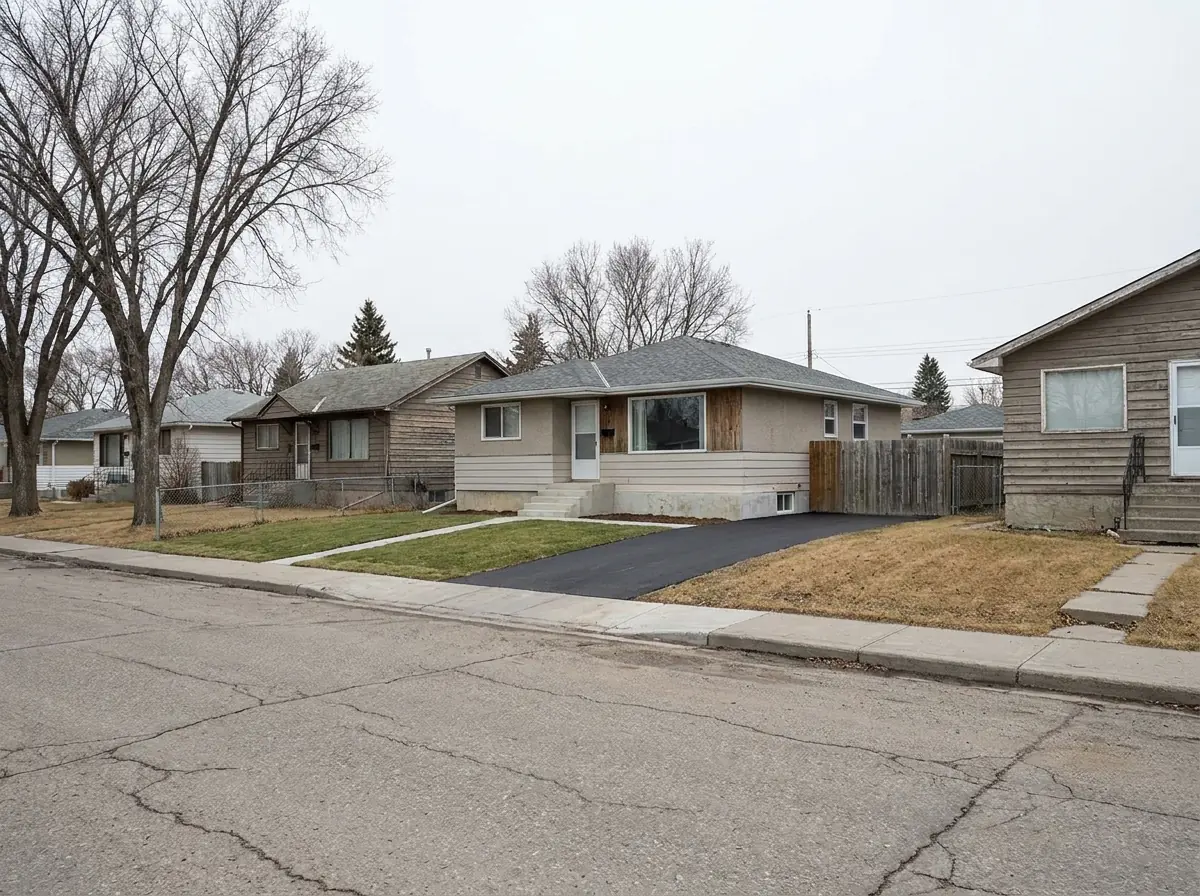
High River is the one town on this list where the usual age-to-material assumption does not hold. It is an old town, but the 2013 flood led to a great deal of repair and replacement work across the community, so a period house here may sit on services considerably newer than the building above them. The practical consequence is that guessing from the build date is less reliable in High River than anywhere else we work, and the camera matters more.
Everywhere else we work, the first useful question is how old the house is. In High River that question is less reliable than anywhere else on our list, and a contractor who reasons straight from a build date to a buried material here will be wrong often enough to matter. This is an old town by Alberta standards. It is also a town where the 2013 flood led to substantial repair and replacement of infrastructure and services across the community — so a period house may well sit on services considerably newer than the building standing over them, and the pair of them tell you nothing reliable about each other.
The practical consequence is that the usual shortcuts do not work on a High River address. A house from an era that would ordinarily suggest a jointed clay lateral may have one, or may not. A street of similar houses may not be uniform below ground the way a street of similar houses usually is. We do not assume, we do not quote from the curb, and we are more insistent about getting a camera down the line here than in any other town we serve — not as an upsell, but because it is the only thing that actually answers the question.
What the camera is looking for has not changed, only the confidence with which it can be predicted. Where the line is clay, Root masses entering at regular intervals, matching the joint spacing. Offset joints showing a step in the pipe wall. Often a long run of sound pipe between two bad joints. Clay is also the material most often replaced for the wrong reason, because often still structurally sound at a hundred years, provided the joints have held — age alone is not a reason to replace clay. Where it is cast iron, the deception runs the other way: A rough, tuberculated interior that snags the camera. Channelling along the invert where the bottom has worn away. The pipe can look intact from above and be gone underneath. And where the run is modern plastic, a defect is usually one event at one place rather than a line quietly reaching the end of itself. Three different pictures, three different answers, and in this town no way to know which you have without looking.
Most likely under a High River property
Ordered most to least likely, with how each one fails. This is a generalisation about an area and never a statement about one address.
- Vitrified claycommonly found in homes built before roughly the 1960s, and in some areas later than that
- It fails at the joints, not in the middle of the pipe. Every joint is a seam a root can find, and a mature boulevard tree has had decades to find all of them. Joints also offset as the ground moves, leaving a lip that catches everything passing over it.
- Cast ironcommon in mid-century construction, and still found in buildings of that period today
- It corrodes from the inside out. Scale builds on the pipe wall and narrows the bore until a line that was four inches is effectively passing two, and eventually the bottom of the pipe — where the flow sits — corrodes through entirely while the crown still looks fine.
- PVCcommon from roughly the 1970s and 1980s onward, and the default in newer construction
- Same story as ABS — the pipe outlives the problem. Bellies from poor bedding, crushing from heavy equipment over a shallow run, and root intrusion at a gasketed joint that was not seated properly.
- ABScommon in Canadian construction from roughly the 1970s onward
- The material rarely fails on its own. What fails is the installation: a belly where bedding settled and now holds standing water, a crushed section where something was driven over it, or a joint that was cold-welded badly on the day.
- Copperthe common water service material through much of the later twentieth century and still installed today
- Pinhole leaks. Copper corrodes from the outside where soil chemistry is aggressive to it, and from the inside where water chemistry is. A service can leak for a long time underground before anything shows at the surface.
Material and era are trade generalisations, not a record of what is under any particular property. What is actually in the ground at an address is settled by a camera, not by the year the house was built.
Who calls us from High River, and why
Most calls here start as ordinary plumbing complaints. A drain that will not clear. A backup that came up through the basement. A water service that went wrong over the winter and has not been right since. Those are the right reasons to call, and the first thing we do about any of them is the same thing a drain company would do — get the line open. The difference is what happens next: we put a camera down it afterwards and tell you what is actually there, which in High River is information that cannot be inferred any other way.
We should be clear that we are not a general plumbing company. No fixtures, no water heaters, no interior supply lines, no gasfitting ticket. Everything we own is pointed at the ground between the wall and the main — a jetter, a cable machine, a camera and sonde, lining equipment and a bursting rig. If your problem is inside the house, we are the wrong call and will say so quickly. If it is buried, this is the whole of what we do.
And the honest outcome here is frequently good news. A line that turns out to be newer than the house above it is a line with a long service ahead of it, and the right advice in that case is a cleaning and a note in the file about what is down there — which is worth having, because next time nobody has to guess again.
Specific to High River
- Build date is a poor guide here
- This is the one town on our list where the age of the house does not reliably predict the age of what is buried under it. We treat a build year as a starting hypothesis, not an answer.
- Why that is true
- The 2013 flood led to substantial repair and replacement of infrastructure and services across the town. The practical effect for a homeowner today is simply that a period house may be sitting on newer services than the building itself.
- Lot by lot, not street by street
- What is under one property here says less about the property beside it than it would in a uniformly developed community. We do not extrapolate from the last job on the block.
- The camera earns more here
- Everywhere we work we camera the line before we quote it. In High River that policy is doing more work than usual, because there is genuinely no other way to know what is in the ground.
Permits and the authority
The Town of High River is the authority having jurisdiction for buried service work on a High River address, and what it requires is established with the Town before work begins rather than assumed from Calgary practice. Where a failure sits out toward the main rather than close to the house, confirm with the Town who owns the section that failed before anyone prices the job.
Communities and districts we work in
Hampton Hills · Montrose · Sunrise
What we do in High River
Trenchless Sewer Repair
Sewer lines replaced from two pits, not a trench.
Drain Cleaning
Drains cleared, and an honest answer on why.
Water Line Replacement
New water service pulled through, lawn intact.
Water Line Repair
One leak in sound pipe is a repair, not a rebuild.
Commercial & Multi-Residential
Underground work scheduled around your tenants.
Every one of those pages describes the same work wherever it is done. What changes in High River is which of them you are likely to need, and that is what the rest of this page is about.
Questions we get asked everywhere
The general questions have the same answers in High River as they do anywhere else, so they are answered once, in full, on one page rather than restated here with the place name changed.
Next door
Tell us what the line is doing
What came out, where, and roughly how old the house is. Those three answers decide what gets loaded before anyone leaves the yard.